Singapore
Blind Willow, Sleeping WomanSingapore is the setting of a four-day holiday whose apparent paradise breaks open in the night after its last crab dinner. For a young Japanese couple, beaches, a quiet back-street restaurant, and the freedom of time away from Tokyo create a sealed world; the young man’s discovery of worms in the crab he has vomited turns that refuge into a point of no return.
Holiday Routine and Shared Meals
The twenty-six-year-old woman teaches English at a private girls’ junior high, and her twenty-eight-year-old boyfriend works as an auditor at a large bank. A rare overlap in their schedules gives them the chance to travel together, and they seek a place where no one will disturb them. For three days they swim and sunbathe, browse local handicraft shops, and return each evening to the same small restaurant on a back street. They try different crab dishes, then go back to their hotel for unhurried lovemaking and sleep. The repetition makes each day seem like paradise, while their effort to avoid subjects that might spoil the mood keeps their shared time carefully bounded.
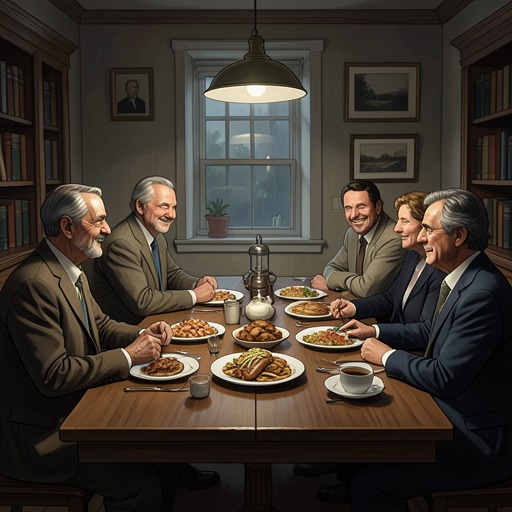
On the fourth day, the last of the holiday, they eat crab again. As they extract the meat from the legs with metal utensils, they talk about how swimming each day and eating crab at night have made their life in Tokyo seem unreal and distant. They mostly stay with the present. Their pauses are comfortable, filled by cold beer and hot crab; after returning to the hotel, they shower and fall asleep following their usual quiet, satisfying lovemaking.
The Discovery in the Hotel Room
The young man wakes feeling dreadful, as if he has swallowed a hard cloud. In the dark bathroom he vomits the crab he has eaten, then vomits again. At first he treats the quantity as the obvious explanation: after days of eating crab, he has simply overdone it. But the white mass in the toilet seems to move. He switches on the light and sees that its surface is writhing with countless tiny worms the same color as the crabmeat.
He vomits again, though his stomach is empty, and even brings up mouthwash. He flushes repeatedly, scrubs his mouth with a towel, and brushes his teeth before confronting his gaunt reflection. In the bedroom, his girlfriend remains asleep, her long hair spread over her cheeks and shoulders. The scene has not visibly changed: moonlight comes through the blinds, waves sound beyond the room, and the alarm clock glows beside the bed. Yet he concludes that the crab is inside her too, since they have eaten from the same dishes. She has noticed nothing.
A Rupture Without Witness
He sits in a rattan chair beside the window and watches his sleeping girlfriend, imagining the worms in her stomach. He considers waking her and telling her, but decides against it. She has no symptoms, and that, to him, is precisely the problem. There is no shared recognition of what has happened—only his knowledge and her unawareness.
As he sits through the night, the discovery expands beyond a bodily fear into a conviction that the world has shifted out of alignment. He thinks that on the surface nothing has changed, but he will never again relate to his girlfriend as he did the day before; he doubts that he can even get along with himself. He wants to sleep and wake to find their life restored, but sleep remains out of reach. The woman does not wake or turn over. By dawn, their closeness has become a separation that she cannot see and he cannot undo.
Place and Narrative Significance
The memory of the couple’s first evening in Singapore returns to the young man as he sits awake: the small side-street restaurant, two elderly Chinese men eating in silence, a black dog with its eyes closed, and faded umbrellas at the tables. Those details, once part of a beautiful holiday, now seem years distant, though only three days have passed. He feels that he has changed in that short interval into one of the ominous, ashen old men he associates with the city.
Singapore’s role in the episode is defined by contrast. The couple came to escape the demands of ordinary life and found pleasure in a dependable cycle of beach, crab, intimacy, and sleep. The same repeated meal that helped make the city feel like paradise becomes the source of the discovery that divides them. The holiday ends not with an argument or an acknowledged confession, but with the young man’s silent certainty that both his relationship and his sense of himself have crossed an invisible boundary.